Skin

Know your skin type

Skin is usually described as one of five types: oily, dry, combination, normal and sensitive. Four signs tell them apart: how skin feels two hours after washing, where it shines by midday, whether it flakes, and how it reacts to new products. This guide asks about each, then suggests facials and consultations worth asking about.

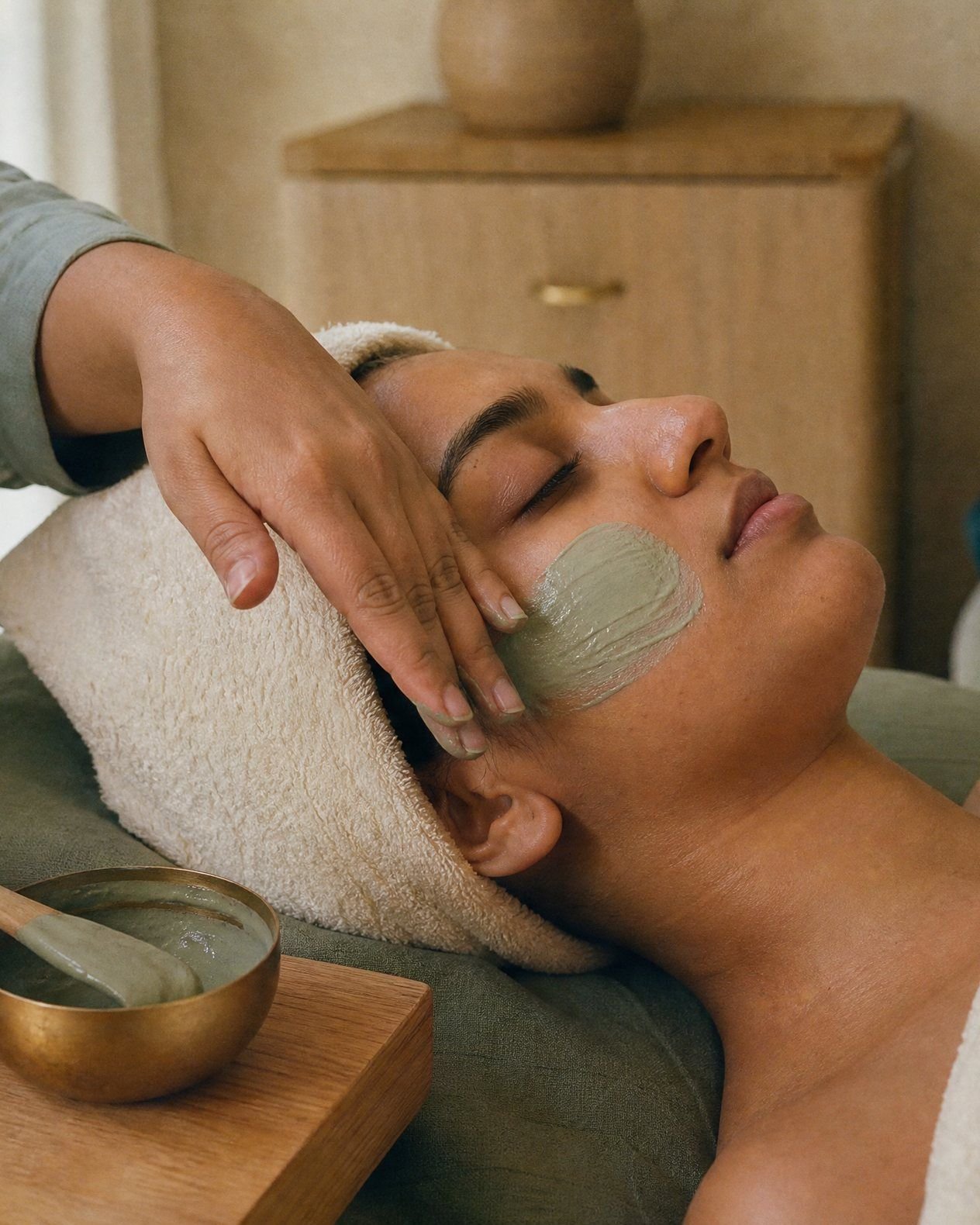
AI-generated image: a woman lies with her eyes closed and a towel headband while a therapist’s fingertips spread a sage-green clay mask across her cheek.

What skin type means

Skin type describes how skin behaves on an ordinary day: how much oil it makes, how easily it dries, how it reacts to products. It isn’t skin tone, and it isn’t a diagnosis.

Know your skin

Which of these
sounds like your skin?

This guide describes everyday skin types. It can’t diagnose a skin condition, and it says nothing about skin tone. If something on the skin is painful, bleeding or changing quickly, please see a doctor.

Oily skin

Makes plenty of oil, so it shines by the afternoon and make-up may slide. Usually comfortable, not tight; it can shift with the seasons.

Dry skin

Makes less oil, so it can feel tight after washing and flake in a Delhi winter. It rarely shines, even by evening.

Combination skin

Oily through the forehead, nose and chin, and normal or dry on the cheeks. One product can suit one area and not the other.

Normal skin

Comfortable most of the time: not tight, not very shiny, and easy with new products. It can still change with the season.

Sensitive skin

Reacts easily: a new product, heat or wind can make it sting, itch or feel warm. Sensitivity can sit on top of any type.

How the guide works

Four questions, one answer each. Answer for how your skin usually is, not for one unusual day. Your answers stay on this page; they aren’t saved or sent anywhere. The result names the facials and consultations worth asking about.

What this guide can’t do

Questions and answers

  • How can I tell my skin type at home?

    Wash your face with a mild cleanser, pat it dry and leave it bare for about two hours. Tight or flaky suggests dry; shiny all over suggests oily; shiny only on the forehead, nose and chin suggests combination; comfortable suggests normal. Skin that stings or reacts to most products may be sensitive.

  • Can your skin type change?

    Yes. Weather, age and the products you use can all change how skin behaves, so it’s worth checking again when the season turns. It’s common in Delhi to notice oilier skin in the humid months and drier skin in winter.

  • Are there separate skin types for Indian skin?

    The five everyday types apply to every skin tone. Skin tone, and how skin responds to sun or to laser, is a different question, and one for a doctor at a skin consultation.

  • How does knowing my skin type help me choose a facial?

    It narrows things down, but what you want from the facial matters too. For care and time to rest, start with the salon facials; for steps chosen by a doctor, a medical facial. The treatment finder goes a step further.

  • Is sensitive skin a skin type or a condition?

    People use the word for both. In this guide it means skin that reacts easily to products or weather. If reactions are strong, frequent or painful, talk to a doctor before trying anything new.

FAQ

Now open.

Reserve your first consultation

Every day, 10:30 am – 8:00 pm · Subhash Nagar metro station